
The Wall Street Tokenization Wave: How the SEC’s Nasdaq Rule Change is Rewriting the Crypto Playbook

After years of skepticism from traditional finance giants, who dismissed blockchain hype, the SEC has as of May 18, 2026, effectively empowered Wall Street to take control of the blockchain ecosystem.
The Securities and Exchange Commission (SEC) approved a rule change that allows Nasdaq to trade securities in tokenized form. This isn’t just a minor technical tweak; it’s the regulatory green light that bridges the gap between decentralized innovation and the massive $126 trillion global equity market.
Here’s a look at what this actually means for the future of crypto, DeFi, and the broader financial landscape.
The Regulatory Green Light: What Actually Happened?
While the SEC officially approved Nasdaq’s rule change on March 18, 2026, the news has surged as of May 18, 2026, alongside reports of a new ‘innovation exemption’ for crypto-native platforms. But let’s be clear about the mechanics: this isn’t about creating a parallel, unregulated crypto market. It’s about bringing the efficiency of blockchain into the existing regulatory framework.
Under the new rules, tokenized stocks will be fungible with their traditional counterparts. They must share the same:
- CUSIP numbers
- Trading symbols
- Shareholder rights (voting, dividends, liquidation)
Essentially, a tokenized share of Apple or Tesla will be legally and economically identical to the traditional share, just settled on a distributed ledger. The SEC is effectively saying,
“If it walks like a security and quacks like a security, it will be regulated like a security, regardless of the ledger it lives on.”
This approval follows a similar move by the New York Stock Exchange (NYSE) in April 2026, signaling a coordinated push by the Trump administration and SEC Chair Paul Atkins to modernize the financial plumbing of the US.
The Infrastructure: It’s Not Just a Pilot Anymore
The real magic isn’t just in the rule; it’s in the infrastructure that makes it possible. The Depository Trust & Clearing Corporation (DTCC), the nation’s central securities depository, has been quietly building the backend for this exact moment.
Following a SEC staff no-action letter issued in December 2025, the DTCC has been developing a “Tokenization Pilot Program.” This program allows:
- Eligible Members: Broker-dealers can opt to settle trades in tokenized form.
- Seamless Conversion: Trades can be tokenized post-settlement or de-tokenized back to traditional book-entry form.
- T+1 Settlement: All tokenized trades still settle on the T+1 cycle, but with the potential for faster finality and reduced counterparty risk.
The pilot is initially limited to securities in the Russell 1000 Index and major ETFs, ensuring that the market starts with the most liquid and stable assets.
Why Ethereum is the “Toll Road” to Tokenization
You’ve likely heard the buzz on X: “Ethereum is the toll road to tokenization.” This sentiment, echoed by industry voices like Joseph Chalom and highlighted by crypto influencer BMNR Bullz, is more than just hype.
While Nasdaq and NYSE are building the on-ramps, the underlying settlement layers are increasingly looking toward high-throughput, permissionless blockchains.
- Interoperability: The ability to move value across different chains is crucial for a global market.
- 24/7 Markets: Unlike traditional exchanges, tokenized assets can theoretically trade around the clock, unlocking liquidity that was previously frozen overnight.
- Fractional Ownership: Blockchain allows for the granular division of assets, opening up high-value securities to a broader demographic of investors.
As Paul Atkins noted, existing securities rules don’t fit blockchain-based systems that combine exchange, clearing, and settlement into a single protocol. This rule change is the first step in adapting the law to the technology, not the other way around.
The “Innovation Exemption”: What’s Next for Crypto-Native Platforms?
While Nasdaq and NYSE get the headlines, the real disruptor might be the “Innovation Exemption” the SEC is reportedly preparing to release as early as this week.
This framework could allow crypto-native trading platforms to offer tokenized stocks under a lighter regulatory structure than traditional exchanges. Imagine a decentralized exchange (DEX) or a DeFi protocol offering regulated tokenized Apple shares without needing a full broker-dealer license.
This would:
- Democratize Access: Bring regulated equity trading to the 24/7 DeFi ecosystem.
- Increase Competition: Challenge the monopoly of traditional exchanges on equity trading.
- Drive Innovation: Encourage the development of new financial products (e.g., automated market makers for stocks).
However, critics warn of liquidity fragmentation and the need for robust investor protections. The SEC will have to walk a fine line to ensure this “innovation” doesn’t become a vector for fraud.
The Bottom Line: A New Era for Finance
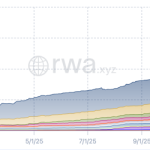
The SEC’s approval of the Nasdaq rule change is a watershed moment. It validates the Real World Asset (RWA) thesis that has been the backbone of the 2025-2026 crypto bull run. The technology is no longer the experiment; the regulation is the final piece of the puzzle.
The SEC officially backing this framework for turning real-world assets into tokenized assets shows the tech is way past just being an experiment. It’s now solid enough to handle serious institutional finance. This isn’t about picking between old-school banking and crypto; it’s about merging the best parts of both worlds.