



Bitcoin tumbled below the key $80,000 level this week after a series of inflation reports rattled financial markets and forced a sharp reassessment of Federal Reserve policy expectations.
The leading cryptocurrency had briefly traded as high as $82,700 earlier in the week but reversed course following back-to-back inflation surprises, highlighting how tightly crypto remains linked to macroeconomic conditions.
Inflation Data Triggers Market Repricing
The selloff accelerated after the U.S. Bureau of Labor Statistics reported that April’s Producer Price Index (PPI) surged 1.4% month-over-month — far exceeding the 0.5% forecast and marking the largest increase since March 2022.
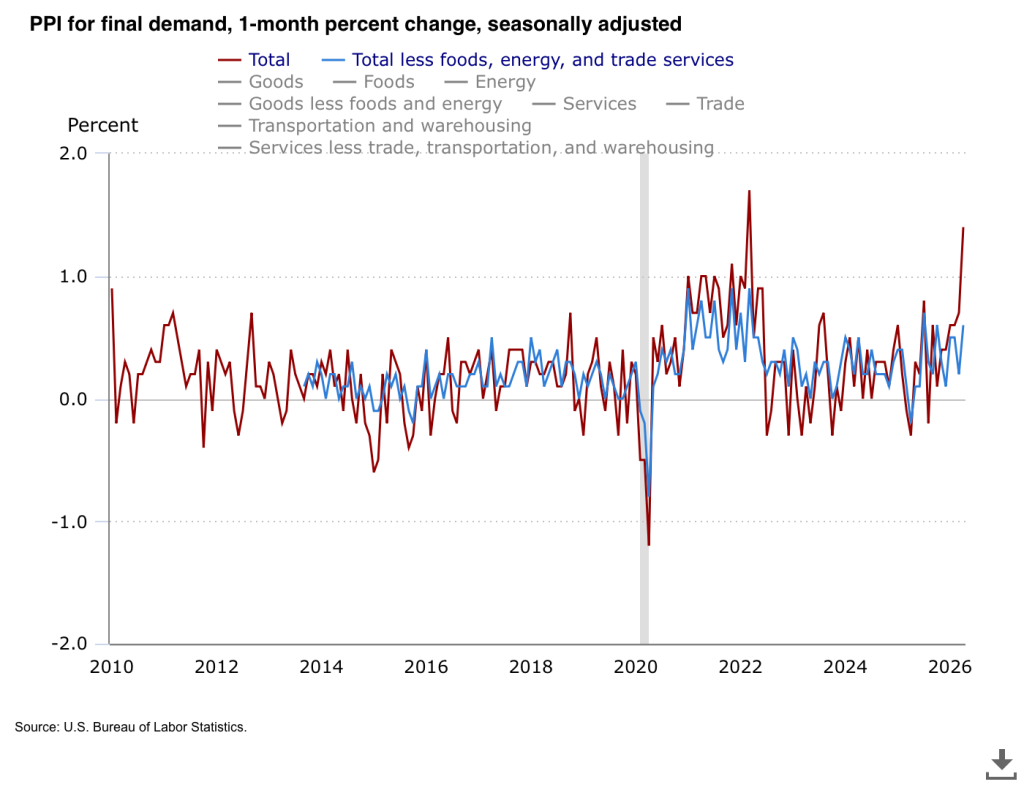
This followed a stronger-than-expected Consumer Price Index (CPI) reading, which showed inflation rising 3.8% year-over-year. Much of the pressure came from energy prices, driven by geopolitical tensions and disruptions in key global shipping routes.
Together, the data has shifted market expectations. Traders are now assigning a growing probability to additional Federal Reserve tightening, with over a 30% chance of a rate hike before year-end. As a result, hopes for near-term rate cuts have largely evaporated, reinforcing a “higher-for-longer” interest rate environment — typically a headwind for risk assets like cryptocurrencies.
On-Chain Metrics Signal Fragility
Beyond macro pressures, on-chain data suggests Bitcoin was already in a vulnerable position.
According to CryptoQuant, the short-term holder realized price — the average acquisition cost for investors holding BTC for less than 155 days — sits around $81,000. Bitcoin’s dropped below $80,000 to $79,192 has pushed this group into unrealized losses.
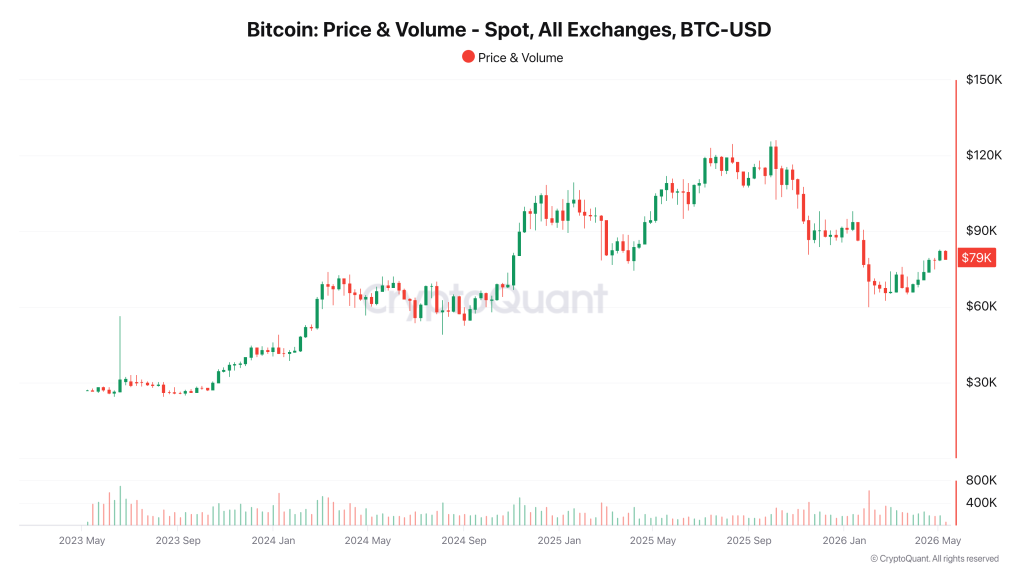
Historically, this condition has coincided with two possible outcomes: either the formation of local market bottoms or the onset of deeper corrective phases marked by capitulation. The current setup leaves the market at a critical inflection point.
Policy and Regulatory Catalysts Ahead
Adding to the uncertainty, markets are also watching key regulatory developments. The Senate Banking Committee is set to review the Digital Asset Market Clarity Act, a potentially significant piece of legislation that could shape the future of crypto regulation in the United States.
At the same time, investors are bracing for upcoming macro and corporate catalysts, including the release of Federal Open Market Committee (FOMC) minutes and Nvidia earnings. Both events could influence broader risk sentiment and, by extension, crypto markets.
Key Levels to Watch
For now, Bitcoin is in $79,000 level in a crucial psychological and technical threshold. It has served as an area where institutional demand and ETF inflows have previously absorbed selling pressure.
However, a sustained break below this level could expose Bitcoin to further downside, with the $78,000–$77,000 range emerging as the next key support zone.
Whether Bitcoin stabilizes or slides further will likely depend on how inflation data, central bank expectations, and market sentiment evolve in the days ahead — a reminder that even in crypto, macro still matters.