
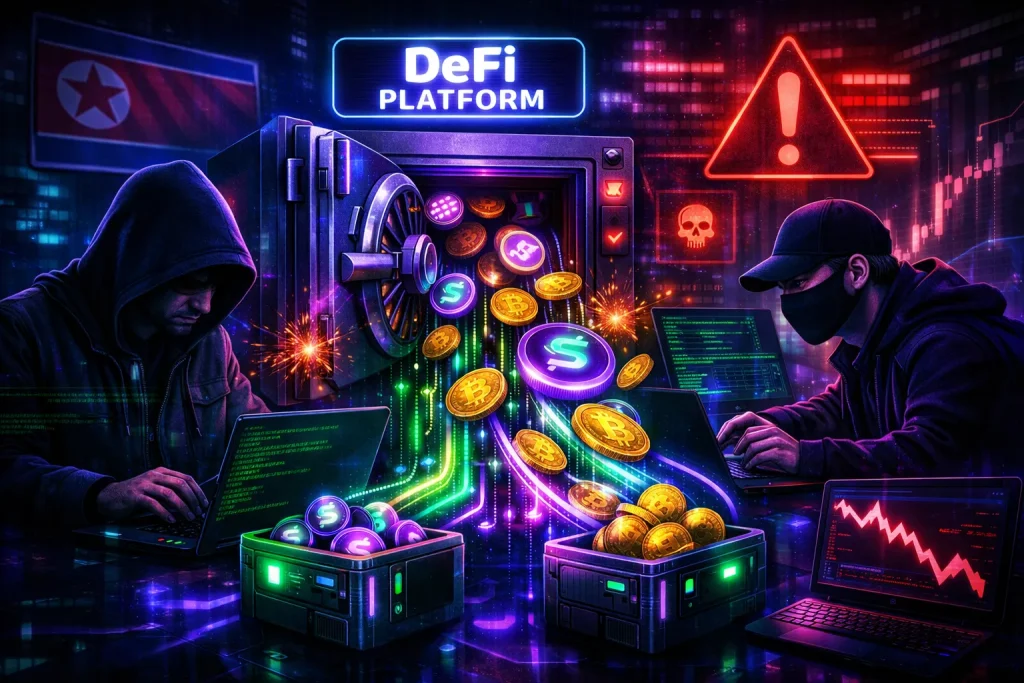
Drift sustained a $270 million exploit that investigators describe as a six-month operation tied to North Korean intelligence efforts. As reported by CoinDesk earlier this week, the incident underscores how complex, multinational cyber intrusions can unfold over months and target key contributors within a project’s ecosystem.
The attackers posed as a legitimate trading firm and established in-person relationships with Drift contributors across multiple countries. After building trust, the operatives deposited their own capital approximately $1 million to demonstrate commitment and credibility. The operation persisted for about six months before the attackers carried out the drain. Officials and researchers referenced North Korean intelligence-linked activity as a guiding thread for the broader operation, though attribution in cyber incidents often involves layered evidence and ongoing analysis.
A Long Con Begins: Fall 2025
Drift’s first contact with the group occurred in late 2025 at a major crypto conference. The attackers presented themselves as a technically sophisticated quant trading firm seeking to integrate with Drift’s vault infrastructure. Their behavior matched what legitimate institutional partners often do: they asked detailed questions, participated in architecture discussions, and maintained consistent communication channels through Telegram and other platforms. Nothing about the early interactions raised alarms.
Building Trust Through Capital and Proximity
Between December 2025 and January 2026, the group took the extraordinary step of depositing more than $1 million of their own funds into a Drift Ecosystem Vault—an act that would normally signal strong alignment and long‑term commitment. They also met Drift contributors in person across multiple countries, further cementing their credibility.
These in‑person meetings were not casual encounters. They were part of a carefully orchestrated persona‑building campaign designed to eliminate suspicion and gain deeper access to the protocol’s contributors and infrastructure.
The Dual‑Vector Intrusion
According to Drift’s incident update, the attackers pursued two parallel intrusion vectors:
- Compromising developer devices through malicious software and vulnerabilities in code editors
- Leveraging their legitimate vault integration to position themselves within Drift’s operational ecosystem
This dual approach allowed them to bypass multisig protections—long considered a gold standard in DeFi security. The final exploit was executed via a durable nonce attack, draining protocol vaults in under a minute on April 1, 2026.
Why This Attack Is Different
DeFi has seen countless exploits, but Drift’s case stands apart for several reasons:
1. State‑Level Patience and Resourcing
Most DeFi hacks are opportunistic. This one was methodical, slow, and well‑funded. The attackers invested months of labor and over $1 million in capital to build trust.
2. Social Engineering at an Institutional Level
Meeting contributors in person, maintaining long‑term communication, and mimicking institutional due‑diligence workflows represent a new frontier in crypto‑focused espionage.
3. Multisig Is Not Enough
The compromise of developer devices and tooling shows that even robust on‑chain governance can be undermined by off‑chain operational weaknesses.
4. A Signal to the Entire Industry
As one security researcher noted, this operation suggests that North Korean threat groups may already be embedded in multiple other teams—waiting.
A Turning Point for Protocol Security
Drift’s team has emphasized that this was not a failure of a single safeguard but a demonstration of how state‑backed actors can exploit the entire social and technical surface area of a decentralized project. The industry must now grapple with the uncomfortable truth that traditional security checklists are inadequate against adversaries with intelligence‑agency patience and resources.
The Drift exploit will likely be studied for years as a watershed moment—one where DeFi’s threat model expanded dramatically, and the line between cybercrime and geopolitical espionage blurred beyond recognition.